How Top HVAC Companies Are Beating Private Equity Consolidators
PE-backed roll-ups are buying HVAC companies in every market. But the smartest independents aren't just surviving — they're winning. Here's how they're doing it.
By LeadFlow Team
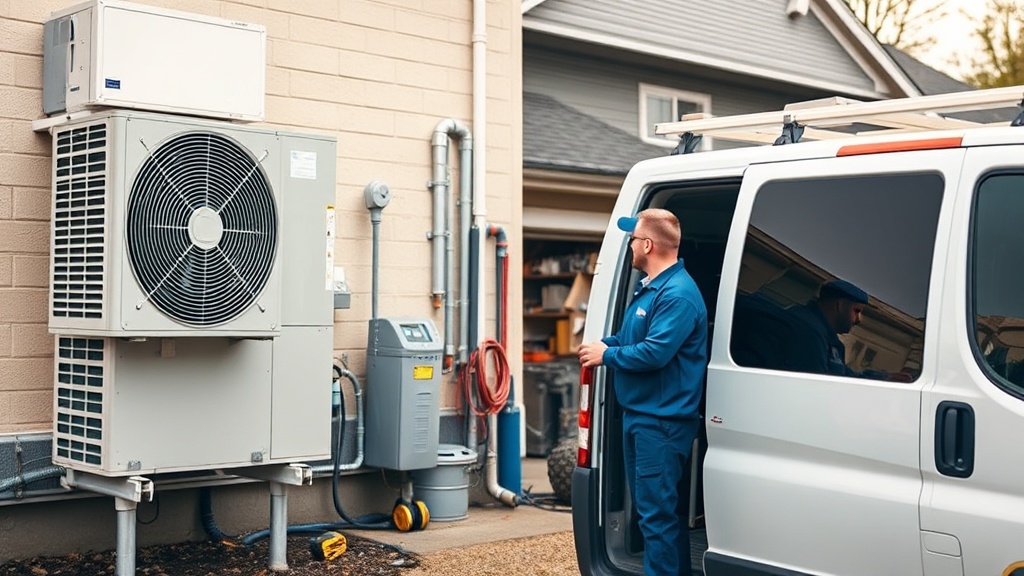
There's a new competitor in your market, and they don't look like any contractor you've faced before.
They have a corporate office in another state. They bought three local companies in the last 18 months. They're running TV ads, wrapping trucks with slick branding, and bidding aggressively on every Google keyword in your zip code.
They're a private equity roll-up, and they're here to take your market share.
Between 2019 and 2024, PE firms acquired over 500 HVAC companies across the US. Major platforms like Apex Service Partners, Wrench Group, and others have built portfolios of 50-100+ locations each. They're well-funded, well-organized, and they're not going away.
But here's what most independent HVAC owners don't realize: PE consolidators have significant structural weaknesses. And the independents who understand those weaknesses are not only surviving — they're taking market share back.
Understanding the PE Playbook
PE firms buy HVAC companies because the economics are attractive: recurring revenue through maintenance agreements, essential service demand, fragmented markets with consolidation opportunity, and relatively predictable cash flows.
Their playbook follows a consistent pattern:
- Acquire 2-5 established local companies in a market
- Consolidate back-office operations (accounting, HR, marketing) to cut overhead
- Push average ticket up through aggressive upselling protocols and sales-driven compensation
- Grow revenue through volume marketing spend
- Sell the platform to a larger PE firm or strategic buyer at a higher multiple
The goal isn't to build a great HVAC company. The goal is to increase EBITDA as quickly as possible for a 3-5 year exit. Everything flows from that incentive.
Their Weaknesses Are Your Advantages
Weakness 1: They Bleed Technicians
PE roll-ups have a well-documented technician retention problem. When a local company gets acquired, the culture changes. New management layers appear. Sales pressure increases. Commission structures shift. The family feel disappears.
The result: 20-35% annual technician turnover at PE-backed shops, compared to 12-18% at well-run independents.
Your play: Become the employer of choice in your market. When PE acquisitions create technician churn, be the company those techs want to work for. Invest in culture, pay competitively, give autonomy, and promote from within. Every great tech who leaves a PE shop and joins yours is market share transferred to your column.
Weakness 2: Their Customer Experience Is Inconsistent
Consolidators standardize processes, which sounds good in a boardroom but plays out poorly in living rooms. Techs get scripted upsell protocols. Pricing shifts to "premium" tiers that homeowners sense are inflated. The owner who used to answer the phone is gone, replaced by a call center.
Online reviews tell the story. Watch what happens to a local company's Google rating 12-18 months after a PE acquisition. It almost always trends downward, from 4.7-4.8 stars to 4.2-4.4. That gap is your opportunity.
Your play: Double down on the personal touch. Owner involvement. Callbacks. Handwritten thank-you notes. Follow-up calls after every install. These things don't scale for a 100-location platform — but they scale perfectly for a 5-15 truck independent operation. And they show up in reviews, which show up in rankings, which show up in market share.
Weakness 3: They Overpay for Leads and Underpay for Retention
PE platforms have massive marketing budgets — $500K-2M+ per market per year. They flood Google Ads, run radio and TV, and dominate paid channels. This makes direct competition on ad spend a losing proposition.
But here's their blind spot: they spend 80-90% of that budget on new customer acquisition. They underinvest in retention, referrals, and organic reputation building because those strategies don't produce the rapid top-line growth that PE investors demand.
Your play: Win on organic search, Google Business Profile rankings, reviews, and referrals. Let them outspend you on Google Ads while you build the assets that generate free leads year after year. A strong #1 position in the Google map pack will outperform $30,000/month in ad spend — and it costs you nothing per click.
Weakness 4: They Compete on Scale, Not Expertise
PE platforms position themselves as the "big, reliable" option. But homeowners don't want big — they want competent, trustworthy, and fair. In study after study, homeowners prefer local businesses over corporate chains for home services, with trust differential running 15-25 percentage points in favor of independents.
Your play: Lead with expertise, not size. Show your face. Tell your story. "Family-owned since 2008" beats "Backed by $500M investment fund" in the mind of a homeowner every single time. Use your website, your social media, and your truck wraps to communicate that you're a local expert, not a corporate entity.
Weakness 5: They Have Quarterly Pressure You Don't
PE-backed companies report to investors on a quarterly cycle. They need to show growth every 90 days. This creates short-term thinking: push revenue now, worry about reputation later.
This pressure leads to specific behaviors you can exploit:
- Over-quoting replacements when a repair would suffice
- Pushing unnecessary add-ons to hit ticket targets
- Rushing jobs to maintain volume
- Under-investing in warranty service
Every homeowner who gets over-quoted by a PE shop and then gets a straight answer from you becomes a customer for life — and a referral source.
Your play: Be the honest second opinion. Run a "Free Second Opinion on Any Quote Over $3,000" campaign. You'll see PE shop quotes regularly, and you'll win a significant percentage of those customers simply by being straightforward about what they actually need.
The Independent's Growth Playbook
You don't need PE money to build a dominant local HVAC business. You need:
A review machine. Aim for 300+ Google reviews with a 4.8+ average. This is the single most powerful competitive weapon against PE consolidators. Automate review requests after every completed job.
A maintenance agreement base. 500+ agreements create a revenue floor that funds shoulder-season operations and builds enterprise value. If you ever do want to sell, a strong agreement base doubles your valuation multiple.
A recruiting brand. The company that attracts the best techs wins. Period. Post behind-the-scenes content. Show your team culture. Pay transparency builds trust with candidates. Be the shop that great techs want to join.
Community presence. Sponsor little league teams. Show up at local events. Your name on the back of 200 kids' jerseys builds more brand affinity than any PE marketing budget can buy.
Operational discipline. Track your numbers: revenue per tech, close rate, average ticket, customer acquisition cost, agreement retention rate. PE companies are data-driven by default. You need to be too — but you can act on that data faster because you don't need committee approval.
The Long Game
Some PE platforms will succeed. Many will struggle with execution, culture, and the messy reality of running a trades business from a spreadsheet. Several have already failed and sold off assets at a loss.
But regardless of what happens to any individual PE platform, the independent HVAC company that builds reputation, retains great techs, and generates its own leads will always have a place in the market. Homeowners want to hire people they trust. Trust is built locally, personally, and over time.
PE firms can buy companies. They can't buy trust. That's your competitive moat — and it gets wider every day you invest in it.
Keep Reading
How to Dominate Your Local Market Before the Season Hits
The HVAC companies that own their market in July started building in February. Here's the pre-season playbook that puts you in pole position before the first heat wave.
The 5 HVAC Metrics That Actually Matter for Growth
You're tracking revenue. Maybe profit. But the five numbers that separate $1M companies from $5M companies aren't the ones on your P&L. Here's what to measure and what each number should be.
Hiring and Keeping Great Technicians Starts With Your Marketing
The HVAC technician shortage isn't going away. The companies winning the hiring battle aren't offering the highest pay — they're marketing to technicians the same way they market to customers.